

MCU Binge PT4

Captain Marvel — This Movie Is Freaking Horrible

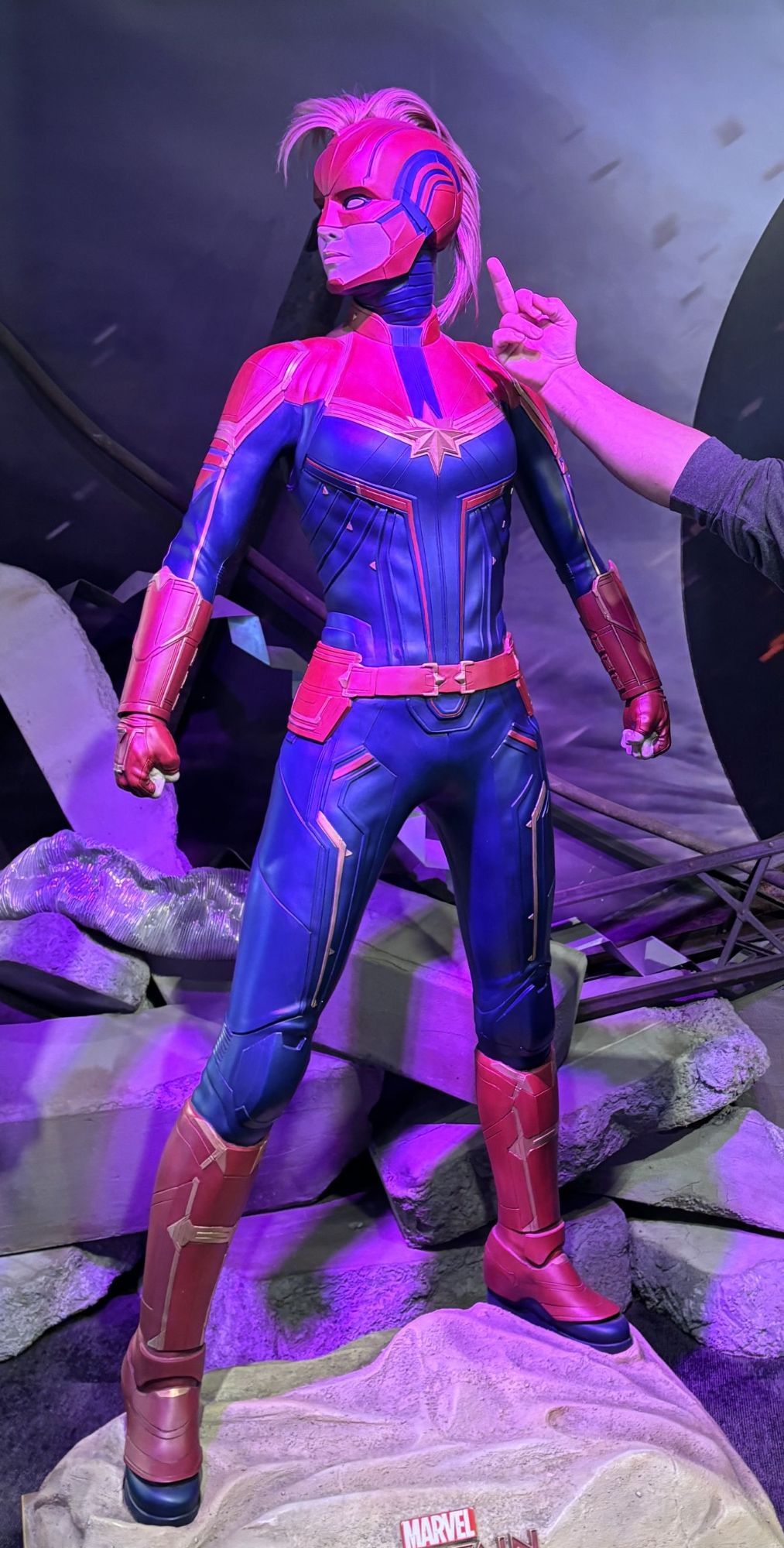
Captain Marvel.

This movie is freaking horrible.

Let me elaborate.

So, we’re supposed to be in the 1990s, and the movie starts us off on this sophisticated, technology-driven Kree alien world. The Kree basically look just like us, except they’re supposed to be blue-skinned aliens.

We’re following Vers, a Kree soldier who can’t remember anything about her past.

Okay. Sure. I can ride with that.

Until she gets into a sparring match with her superior, Yon-Rogg.

He’s teaching her about technique and keeping her emotions under control. He basically tells her that she needs to control herself and not let her emotions take over.

And then he beats her because she loses control.

So what does she do?

She blasts him with her cosmic powers because she lost her temper.

Please remember that.

Because this becomes the underlying theme of this entire freaking movie.

We’re immediately put back into a “girl boss” situation where we’re constantly being told that Carol is incredibly powerful and capable, but the movie doesn’t really give us much substance to go along with it.

Then she speaks to the Supreme Intelligence, which is basically the supercomputer that controls the Kree civilization.

The Supreme Intelligence appears to you as the person you most want to see.

And for some reason, when it appears to Vers, it takes the form of a woman in an Air Force uniform.

There’s really no explanation for it at first.

Of course, it eventually becomes connected to her past.

Vers eventually figures out that this woman was investigating something on another planet.

And guess what planet?

Earth.

Meanwhile, they get themselves involved in a battle with the Skrulls, who are supposed to be the mortal enemies of the Kree.

And look, at this point, the movie becomes incredibly predictable.

Vers ends up captured by the Skrulls, and they basically mind-rape her by digging through her memories.

She eventually escapes and ends up on Earth.

And that’s where we meet a young Nick Fury and a young Agent Coulson.

And I’m trying.

I really am.

But this movie is making it incredibly difficult.

They turned Nick Fury into a freaking buffoon.

This is Nick Fury.

And somehow we’re watching this guy who barely seems to understand what he’s doing.

Then we get Agent Coulson, who’s basically a rookie and doesn’t really do much of anything.

And then we meet the cat.

You know, the cat.

Except it’s not actually a cat.

It’s an alien.

And this alien scratches Nick Fury’s eye.

That’s how Nick Fury loses his eye.

Not during one of the countless dangerous missions Nick Fury has supposedly been involved in throughout his comic-book history.

Nope.

A freaking cat scratched him.

Okay.

An alien cat.

But still.

That’s the explanation we’re going with.

Somehow, we’re also introduced to this whole backstory where Carol was a fighter pilot in the 1990s with another woman, Maria Rambeau.

Apparently, they were basically the female version of Top Gun.

And then we’re introduced to a young Monica Rambeau.

Remember her?

Because apparently she’s important too.

And then there’s the Skrulls.

Did I mention that the Skrulls are apparently refugees?

Yeah.

These guys, who have traditionally been portrayed as monsters and enemies in the comics, are suddenly being used as a metaphor for refugees.

We’re supposed to feel bad for them because they’re hiding out on Earth and just trying to find somewhere to live.

And I’m sitting there thinking:

Wait… what?

How the hell did we get here?

The movie takes these traditionally villainous characters and completely changes their role so we’re supposed to sympathize with them.

Fine.

Whatever.

But it just adds to the feeling that this movie is trying to make a statement instead of actually telling me an interesting story.

Eventually, we get to the big reveal.

Vers is actually Carol Danvers.

Oh!

Carol Danvers.

That’s why they called her Vers.

Interesting twist.

I’ll give them that one.

But here’s the thing.

After everything she goes through, she’s still losing her temper, blasting things without thinking, and basically doing whatever she wants.

And somehow, she’s always right.

Remember earlier when Yon-Rogg was teaching her about controlling her emotions?

Yeah.

Apparently, that lesson didn’t stick.

And then we get to the end.

Carol, now officially Captain Marvel, decides she’s going to fly off into space to help the Skrulls find a new planet to live on.

Before she leaves, she gives Nick Fury a two-way pager so he can contact her if something really important happens.

Think about that.

Just keep that little detail in the back of your mind.

You’ll be thinking about it later.

I swear.

Then Nick Fury starts putting together the idea for the Avengers Initiative.

And where does he get the name?

Oh, that’s right.

Carol Danvers’ plane.

Because remember, she’s this incredibly cool and famous fighter pilot, and her plane is called the Avenger.

So apparently Nick Fury looks at the name on her plane and thinks:

“You know what? That’s what I’m going to call my superhero initiative.”

Give me a freaking break.

And that’s Captain Marvel.

By far, one of the worst movies I’ve watched in this entire MCU timeline.

I’m actually starting to miss Wakanda.

And that’s saying something.

-X

MCU Binge PT3

MCU Binge Review: Agent Carter — Girl Boss or Just Bossy?

Agent Carter. Where do I even begin?

As I continue working my way through the MCU timeline Disney+ has provided, Agent Carter came up as a one-shot. I started watching it, and immediately realized that it was basically a recap of the end of Captain America: The First Avenger.

Part of me thought, Okay, this is actually pretty cool.

It established a direct connection to the movie and showed that this wasn’t some completely random side story. But at the same time, I couldn’t help thinking it was a little lazy. They used so much footage from the movie that it felt more like an extended deleted scene than something that stood on its own.

And then…

It ended.

That’s it.

Except then I discovered there was an entire Agent Carter television series.

And for the life of me, I couldn’t understand why the series wasn’t included in the MCU timeline I was following. If the one-shot was important enough to be included, why wasn’t the actual series?

So I made the conscious decision to watch it anyway.

Because if Marvel made it, and it’s connected to the character, I’m going to watch it.

And that’s where things got… interesting.

Peggy Carter vs. The Patriarchy

Now, let me make something very clear before I get completely attacked for this review.

I like strong female characters.

I’m a huge fan of Wonder Woman. I have absolutely no problem with women being the strongest character in the room. I don’t need every female character to be rescued by a man, and I certainly don’t think a woman needs to be written as weak just because she’s a woman.

But Agent Carter…

Oh, boy.

In my humble opinion, this show was rough.

For the first several episodes, Agent Carter could apparently do no wrong.

She had the answer for everything.

Didn’t matter whether she was the scientist, the boss, the strategist, or the person who had any actual experience with whatever problem was happening.

She was Agent Carter.

Therefore, she knew everything.

And everybody else was apparently an idiot.

The entire first few episodes felt like they were screaming at the audience:

“Look how awesome Peggy Carter is!”

“Nobody takes her seriously!”

“She’s a woman in a man’s world!”

“Look how everybody underestimates her!”

“Look how she proves them wrong!”

And then they would do it again.

And again.

And again.

By about the fourth episode, I was honestly getting aggravated.

I felt like my senses were being assaulted by the constant reminder that Peggy Carter was a badass.

And then something happened that completely changed the way I was watching the show.

The Moment That Saved It For Me

There was a conversation between Peggy and Jarvis, Howard Stark’s butler and, somehow, Peggy’s sidekick.

After Peggy made a statement, Jarvis looked at her and basically questioned whether what she was saying was confidence or arrogance.

Peggy looked right back at him and said:

“It might be a bit of both.”

And I actually stopped for a second.

Wait.

That was self-awareness.

That was Peggy Carter admitting that maybe she wasn’t always right.

And from that point forward, I felt like the storytelling started to change.

Peggy started making mistakes.

Things started going wrong.

People around her started getting hurt.

Plans didn’t always work.

And suddenly, she felt like an actual human being instead of a walking billboard for how awesome she was.

That one little moment made me start paying attention again.

Then I Started Enjoying It

By the time I got into the second season, I actually started enjoying Agent Carter.

A lot more.

The show started leaning into a crime-noir style that I really liked. There was a darker atmosphere, more mystery, and more of that old-school detective feeling.

And honestly, that worked for me.

There was always going to be a certain amount of campiness because of the time period.

We’re talking about the 1920s, 30s, and 40s aesthetic. The clothes, the dialogue, the presentation, the way characters behave—there’s an intentional feeling of watching something inspired by the movies, television shows, and radio programs of that era.

And I’m okay with that.

Actually, I kind of enjoyed it.

But then we got toward the end of the second season.

And the campiness went from:

“Okay, this is fun.”

to:

“Okay… we’re really doing this?”

The last couple of episodes became so over-the-top that I found myself enjoying the show less and less.

And then came the ending.

Wait… That’s It?

Agent Carter only lasted two seasons.

And it ended on a cliffhanger.

A cliffhanger that they never got to resolve.

That’s one of my biggest frustrations with television shows that get canceled.

If you’re going to give me a satisfying ending, fine.

If you’re going to leave me wanting more, also fine.

But if you’re going to leave me with a giant unresolved storyline and then disappear forever…

I’m going to be annoyed.

And that’s exactly what happened here.

After spending all that time with Peggy Carter, I wanted some sort of conclusion.

Instead, the show basically said:

“To be continued…”

Except it wasn’t.

So, Where Does Agent Carter Rank?

Here’s where I’m going to probably make some people mad.

Out of five stars, I’m giving Agent Carter…

1½ to 2 stars.

Maybe I’ll be generous and call it 2 stars.

There were things I genuinely liked.

I liked the period setting.

I liked the noir elements.

I liked Jarvis.

I liked seeing Howard Stark operate in the background.

And, eventually, I started liking Peggy Carter herself once the show allowed her to actually be flawed.

But those first several episodes were a struggle for me.

I don’t need a show to constantly tell me that its main character is amazing.

Show me.

Let her fail.

Let her make mistakes.

Let other characters be smarter than her sometimes.

Let her get something completely wrong.

That’s what makes a character interesting.

Ironically, Agent Carter became more enjoyable for me when Peggy finally started becoming human.

Unfortunately, by the time I really started getting into the show, it was almost over.

And then Marvel pulled the plug.

So my MCU binge continues.

And once again, I’m left wondering:

How many more of these shows are going to make me question my decision to watch the entire MCU in timeline order?

-X

MCU BINGE PT2

MCU Binge Review: Captain America: The First Avenger

So, it’s time for another binge review of the MCU!

According to the ultimate timeline provided by Disney+, the next movie on my journey is Captain America: The First Avenger. And let me tell you something: this is crazy for me to say, but I think Captain America: The First Avenger is quite possibly the most perfect superhero movie I have ever seen.

I mean that.

Everything about this movie works for me.

The aesthetics, the setting, the costumes, the atmosphere, the jokes, the characters—it all feels like it belongs. The filmmakers did an incredible job keeping the movie grounded in the World War II period while still making it feel like a superhero movie.

And what really impresses me is the world-building.

This movie is technically not the first film in the MCU, yet it manages to take everything that has already been established and expand the universe in a completely different direction. Instead of feeling like we’re watching a movie that exists only to introduce Captain America, it feels like we’re watching an important piece of a much larger story.

And somehow, it doesn’t feel forced.

That’s one of the things I appreciate most about this movie. It knows exactly what it wants to be.

Of course, there’s another reason this movie hits differently for me.

I’ve been a Captain America fan for many years.

Captain America was one of the first comic-book characters I remember getting into when I was younger, especially back in the early ’90s. I can still remember having Captain America comics and being fascinated by the character.

To me, Steve Rogers is Captain America.

Not just because he has the shield or the costume, but because of what the character represents. He’s not necessarily the strongest person in the room, and he’s certainly not the most powerful. What makes Steve Rogers special is his willingness to stand up for what he believes is right—even when doing so is difficult.

And I think this movie captures that perfectly.

Chris Evans’ portrayal of Steve Rogers is a huge part of why the movie works so well. He manages to make Steve feel like an actual person rather than just a superhero. You understand who Steve is before he ever becomes Captain America, which makes his transformation mean so much more.

Honestly, I went into this movie expecting to enjoy it.

I didn’t expect to come out of it thinking:

“This might be one of the best superhero movies I’ve ever seen.”

But here we are.

There are plenty of superhero movies that I enjoy. There are plenty that I think are fun. But Captain America: The First Avenger feels complete. It has a beginning, middle, and end. It tells its own story while still contributing to the larger MCU.

And for someone who has decided to take on the ridiculous task of watching the entire MCU in timeline order, this movie has definitely motivated me to keep going.

So far, this is easily one of my favorites.

If you’ve never watched Captain America: The First Avenger, I highly recommend giving it a chance.

For me, this one gets a very enthusiastic recommendation.

And now I have to see what the MCU timeline throws at me next.

-X

MCU BINGE PT1

My MCU Timeline Experiment: Starting With Eyes of Wakanda

So, I do what most people do these days: I binge-watch TV shows.

My problem is that I’ve started running out of basic TV shows that I actually like or am willing to tolerate. So, I made the conscious decision to watch the entire MCU timeline.

I know, I know. That’s ridiculous on so many levels.

Personally, I’m not a huge fan of the MCU movies. I feel like they’ve gotten out of control in so many ways. They’ve changed characters’ races, genders, and even backstories to fit whatever narrative they’re going for at the time.

Ironically, this is pretty much what they’ve done with Marvel Comics in general over the years, so I guess it’s on-brand for them.

Nevertheless, they seem to have an ample amount of content for me to leave playing in the background while I do other things. At least, that was the theory.

So, I started.

Eyes of Wakanda: A Painful Beginning

I began with Eyes of Wakanda.

It’s an animated series, and I wasn’t entirely sure why it was the starting point for the MCU timeline. But whatever. I figured I’d give it a shot.

What followed was roughly five episodes of some of the most painful viewing I’ve experienced in a while.

Apparently, Wakanda had technology so advanced that, even back in the 1300s—or whenever some of these episodes were supposed to take place—they had teleportation, radios, flying machines, and all sorts of other technological wonders.

Meanwhile, the rest of the world was apparently still trying to figure out how everything worked.

I understand the basic premise. Wakanda is technologically advanced compared to the rest of the world. We get it. That’s the whole point of Wakanda.

But holy hell, did they need to hammer that point home in every single episode?

It was like watching the same message repeated over and over again, just with different characters and slightly different historical settings. By the end, I was starting to wonder if the writers thought the audience had the memory of a goldfish.

And honestly, it hurt my head.

Now, I’m not someone who automatically dislikes Black Panther. I liked Black Panther before all of this. The concept of Wakanda is interesting, and there’s plenty of potential in exploring its history, culture, and technological development.

But Eyes of Wakanda somehow managed to make the whole thing feel exhausting.

Time Travel, Vibranium, and Whatever the Hell That Was

Then we got to the final episode.

Without getting too deep into the weeds, the story involves a time-traveling Black Panther queen attempting to stop a prince in the present from saving a piece of vibranium. Apparently, this would interfere with the future, where someone needed to steal that vibranium to keep the timeline intact.

Or something like that.

Seriously.

At this point, I was just sitting there trying to figure out why any of this needed to be so complicated. We’ve got time travel, vibranium, a queen trying to manipulate events across different points in history, and a timeline that apparently depends on someone stealing something at the right moment.

Because, naturally, the best way to tell a story about Wakanda is to make it a time-traveling headache.

The only genuinely worthwhile part of the episode was the connection to Killmonger.

When that scene came around, all I could think was, This is the only episode I really needed to watch.

Seriously. Just fast-forward to that scene, show me the animated version of the relevant events, and call it a day.

It would have gotten the point across without making me sit through all the unnecessary nonsense leading up to it.

What a waste.

Is This Really Where the MCU Timeline Begins?

Overall, I rate Eyes of Wakanda as horrible.

And the fact that this is supposedly the first thing you should watch to understand the MCU timeline tells me everything I need to know about the shitshow I might be in for.

If this is the starting point, I can only imagine what the rest of the journey is going to look like.

But, in the interest of fairness, I made a commitment to this ridiculous experiment. I’m going to keep going, watch the timeline in order, and see what happens.

Maybe I’ll find something I genuinely enjoy. Maybe I’ll discover that some of the shows are better than the movies. Or maybe I’ll spend the next several weeks questioning my life choices while a superhero show plays in the background.

Only time will tell.

For now, though, Eyes of Wakanda has set the bar impressively low.

And somehow, I have a feeling this is going to be a long ride.

On to the next one.

— X

Can’t Chase Ghosts..

You know, there’s been a term floating around in my head for the better part of the year: you can’t chase ghosts.

The reason this has been stuck in my head is because I’ve had relationships with people that ended very abruptly, without any clear reason. My problem is that I love these people, and the feeling doesn’t seem to be mutual.

That’s the part that hurts.

No, this isn’t some creepy stalker thing. This is about coming to grips with the fact that sometimes family members don’t want to be your family anymore, and you have to learn how to deal with that.

This morning, I was going through my Google backup of pictures, and I made the conscious decision to remove all the pictures of these people from my phone. I kept running into the same problem: I would open my phone, come across one of those pictures, and immediately be filled with sadness.

It feels like a scab that keeps getting ripped open, never giving the wound a chance to heal.

I don’t think that’s particularly healthy. But I’m no professional. I’m just a guy who makes dick and fart jokes.

I wish there were a way to have closure that wasn’t so final. I know I’m asking for things to go both ways, and I understand that’s not always possible. That’s not the reality we live in.

Does understanding that make it hurt any less?

No.

But despite everything, I genuinely wish them all the best. I hope they have nothing but success and happiness in their lives. In fact, believe it or not, I pray for them daily. I pray that they’re doing well.

I’m sure it would probably make them upset to know that I pray for them, considering their personal stance on organized religion and their moral ambiguity. But still, I do.

Why am I telling you all of this?

Because sometimes we just need an outlet to say the things that are inside of us.

Maybe writing this is my way of letting go. Maybe it’s my way of accepting that some people are going to leave your life, whether you’re ready for it or not.

You can’t chase ghosts.

Sometimes, all you can do is remember the good times, wish them well, and keep moving forward.

Thank you for taking the three seconds to read this.

Even if you didn’t want to, we’ve just become a little closer.